The project
Kerry is synonymous with the bloodshed, bitterness and trauma of the Irish Civil War. Using North Kerry as a regional case study, this project, led by Dr Richard McElligott, will explore the complex legacies of the conflict on everyday life in the Irish Free State. The project will evaluate the extent to which violence, intimidation and rivalries, elicited by the Civil War, continued to resonate in daily life in communities across North Kerry in the post conflict period. It will assess whether subsequent political activity and disputes, followed by the noted resurgence of IRA activity and the rise of the Blueshirt movement there in the early 1930s, represented new expressions of these enduring fractures at community level.

Additionally, the project will examine the dynamics of personal grief, loss and private memory. It will investigate how individuals, families and communities in the region subsequently coped with the death, injury and loss of loved ones caused by the conflict. It will consider how the physical/psychological trauma and material impact of this manifested itself at a personal and communal level in the years that followed. Likewise, the extent to which North Kerry was impacted by the post-Civil War exodus of Republicans via emigration will be appraised.
This project will also further our understanding of Civil War commemoration and memory by charting the history of locally initiated commemorative projects to both pro and anti-Treaty forces in North Kerry and explore more broadly the communal remembrance of the conflict in a national and international context.
Dr Richard McElligott
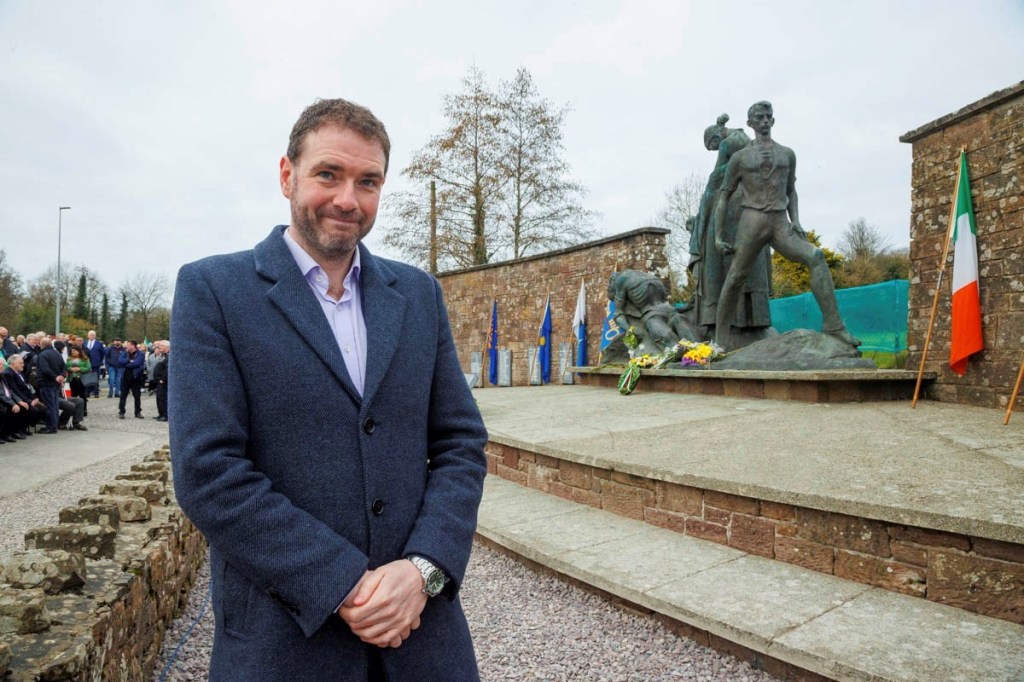
Dr Richard McElligott is a native of Stacks Mountain, Kilflynn in North Kerry and is lecturer in Modern and Irish History in the Department of Business and Humanities, Dundalk Institute of Technology (DkIT).
Prior to his appointment at DkIT, Richard was a senior historical researcher with the Irish Mother and Baby Homes Commission of Investigation from 2015-2019.
Richard received his PhD from University College Dublin in 2012 and since then has taught and published widely on the history of nineteenth- and twentieth-century Ireland, the Irish Revolutionary era, Irish cultural nationalism and Irish sport.
He is the author of Forging a Kingdom: The GAA in Kerry, 1884-1934 and co-editor of A Social and Cultural History of Sport in Ireland. His research has been published in several edited collections and national and international journals including Eire-Ireland, Irish Studies Review, and Irish Economic and Social History.
Richard is a regular contributor to television, radio and the national press, a former curator of RTÉ’s National Treasures and the 2017 winner of the McNamee Award for journalism.
For more information, visit my DkIT staff profile.
 Echoes of War